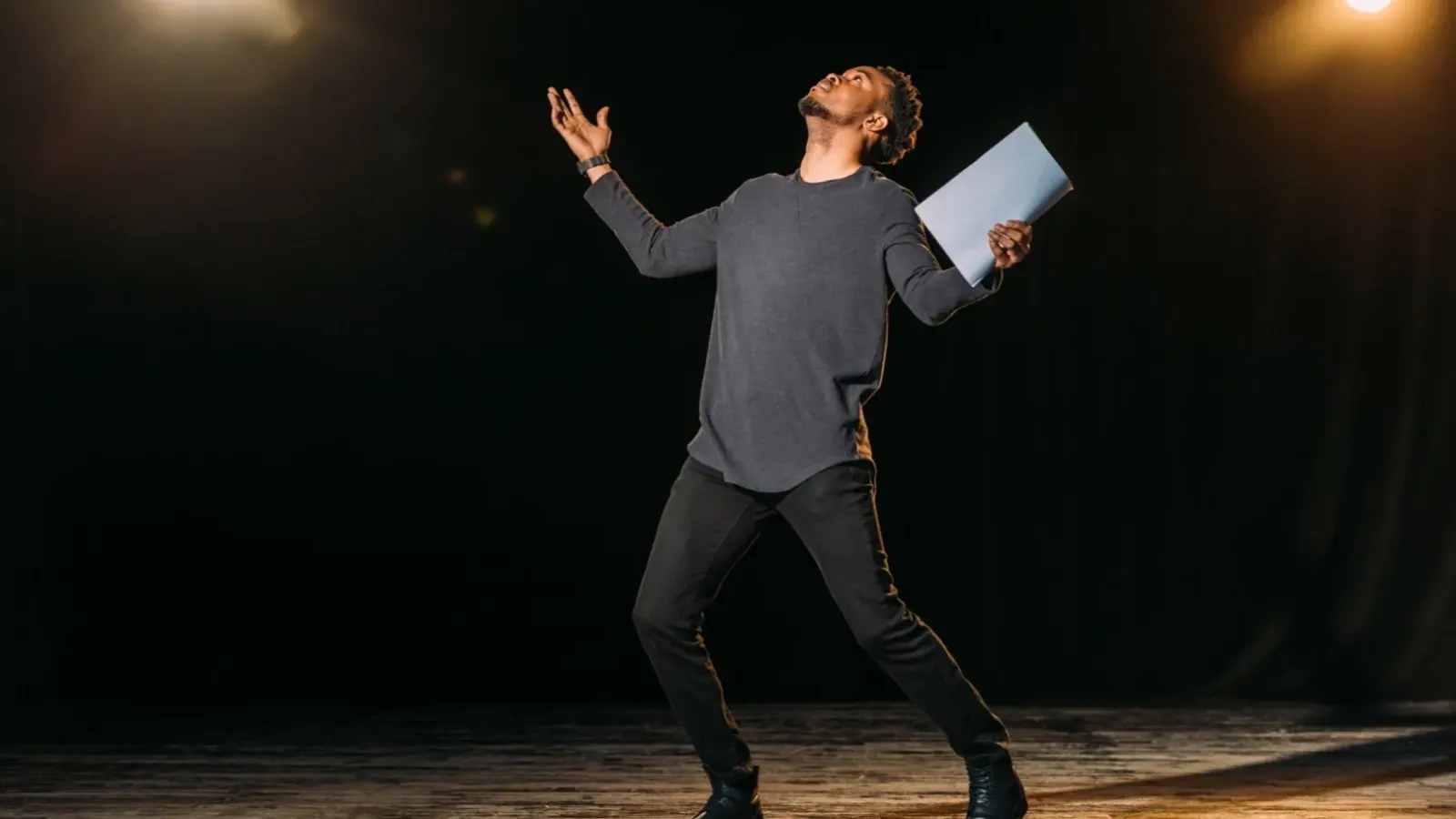
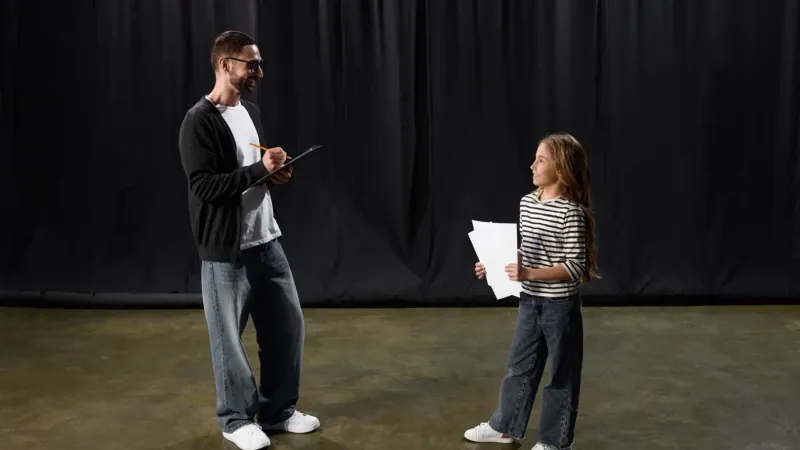
You walk into the room, someone hands you two pages you've never seen, and you have maybe five minutes before you read. That's a cold read, and it terrifies almost everyone the first hundred times. But cold reading is a skill, not a talent you either have or don't have, and it rewards a small set of decisions made fast and committed to fully.
This is the part of auditioning that nobody really teaches in scene-study class, yet it's how a huge share of real-world casting actually happens. The good news: you don't need more time. You need a better method for using the time you get. Here's how to read sides quickly, make decisive choices, lift the lines off the page so you can actually act, and keep your nerves from running the show.
What a cold read is actually testing
When a casting director hands you fresh sides, they are not testing your memory and they are not expecting a polished, off-book performance. They want to see whether you can make a human being appear under pressure, whether you listen and react, and whether you make a choice and stand behind it. As the team at Anderson University frames audition prep, the core questions are simple: what is your objective, who are you talking to, and what is your relationship with this person.
Hold onto that. Everything below is in service of answering those three questions fast and then living inside the answers.
The three things to find before anything else
With only a few minutes, you cannot mine the script for every nuance. You can find three things, and three things are enough to carry a scene.
- Relationship. Who is this person to you, right now? Casting director Michael Shurtleff, who literally wrote the book on this, put relationship at the top of his list of audition principles. As one casting resource summarizing Shurtleff's Audition and his guideposts puts it, characters need to know "who am I talking to" and what they want from the other person, because that's what creates emotional depth. Lover, rival, parent, stranger you need something from. Pick the most specific, highest-stakes option the text allows.
- Objective. What do you want from them in this scene, and what will you do to get it? A want gives the scene direction and gives you something to fight for. Decide it quickly and commit.
- Conflict. What's in the way? Shurtleff's second principle is conflict: the stronger what you're fighting for, the more engaging the scene, as that same breakdown of his guideposts notes. If the scene feels flat, you haven't found the fight yet.
Notice these aren't intellectual. "My objective is to get my brother to forgive me before he leaves" is playable. "My character is conflicted" is not.
The eyes-up technique: take the line off the page
Here's the single most visible difference between actors who look like they can do this and actors who look buried in paper. The skill is called taking the line off the page, and it works on a simple rhythm: your eyes go down to grab the line, then up to deliver it to your reader.
The rule the studios drum in is blunt and worth memorizing. As Seydways Acting Studios states it: never speak when you are looking at the page. You look down, you steal the words, you lift your eyes, and then you say them to the person in front of you. The page is a teleprompter you glance at, not a script you perform into.
A few mechanics that make this possible:
- Move your eyes, not your head. Hold the sides at roughly chest height so your face stays visible, and drop only your eyes to the page. Big head-bobs read as panic.
- Use your thumb as a place-keeper. Run your thumb down the margin at the pace of the dialogue so you never lose your spot and never have to hunt for the next line.
- Listen with your face up. When the reader is speaking, stay on them. Don't bury your head stealing your next line while they talk. Let what they say land, then glance down. The Actors Pulse makes the same point: keep your head up while your scene partner speaks and react in real time rather than reading ahead.
- Memorize the first and last line. You only need two. Knowing your opening and closing lines by heart lets you start with full eye contact and land the ending with conviction, the two moments that frame the whole read.
On camera, this matters even more: your reactions to the other person are often more telling than the words you say. A connected, eyes-up read looks like a scene. A face-down read looks like someone doing homework.
A 5-minute cold-read prep routine
When the sides hit your hands, resist the urge to start memorizing. Memory is the wrong goal. Spend your minutes like this:
- Minute 1 — Read it through once, slowly. Just understand what happens. Who's there, where are they, what shifts by the end. Don't perform it in your head yet.
- Minute 2 — Lock the three answers. Relationship, objective, conflict. Say them to yourself in plain language. Pick the most specific, highest-stakes version each time.
- Minute 3 — Find the turn. Locate the one moment the scene changes: a discovery, a decision, a piece of news. Mark it. That's your scene's spine and the place to spend your energy.
- Minute 4 — Mark the eyes-up beats. Memorize your first and last lines. Glance at where the big reactions live so you can be looking up for them, not down.
- Minute 5 — Breathe and set the moment before. What just happened to you before this scene started? A single image is enough. Then drop the analysis. You've made your choices; now trust them.
That's it. You will not have figured out everything, and you're not supposed to.
Make the choice, then commit to it
The most common cold-read mistake isn't a bad choice. It's a tentative one. When you hedge, the room feels it. Once you've decided who the character is, what they want, and how they feel about the other person, stick with those decisions even if doubt creeps in mid-scene, because casting directors read hesitation as uncertainty about your own work.
Two practical consequences:
- A clear, "wrong" choice beats a safe, vague one. Directors can redirect a committed actor in seconds. They can't do anything with someone playing it generically. If they give you an adjustment, pivot fully and play the new choice with the same conviction. Adaptability is part of what they're casting.
- Mistakes aren't the enemy. Everyone trips on a line. If you skip a word or lose your place, stay in your objective and keep going. Often that recovery adds a flicker of real, unscripted life, the opposite of a disaster.
Handling nerves when you've had no time
Nerves don't mean you're unprepared; they mean you care. The trick is to give your attention a job so it stops spiraling. Put it on the reader. The moment your focus is on getting something from another person, there's no spare attention left to monitor your own anxiety. Listening is the best anti-nerves tool there is.
The deeper fix is reps. These mechanics, eyes up, thumb on the margin, three fast choices, only feel calm when they're automatic. Practice cold reads at home with random sides and a 10-to-15-minute timer, ideally with a friend reading opposite you. Record them and watch how often your face is up versus down. The skill you're building is so habitual that pressure can't knock it loose. As Anderson University puts it, you trust the work and stay positive in the journey you're on rather than managing anxious thoughts mid-scene.
How Platform Acting fits in
Cold reading gets better the more reps you get and the more honest feedback you have on those reps, which is exactly the loop that's hard to build alone. Platform Acting is an AI-assisted, expert-verified training platform where you can upload a monologue or scene and get consistent feedback on tone, expression, body language, and emotional delivery, with concrete strengths and things to work on, so you can see whether your choices are actually landing and whether your eyes-up connection reads on camera. From there a qualified coach can verify your level with a credential anyone can confirm, and your work feeds a portfolio and self-tape workflow built for getting cast. It's free to create an account, and if you want the bigger picture you can see how it works or what's built for actors. When you're ready to push further, our guides on getting the most from AI performance feedback, recording a self-tape that gets you cast, and choosing between Meisner and Stanislavski pick up right where this leaves off.